Globalaw - Home
ContactMember Login
Our social network
Member Spotlight: DeBenedetti Majewski Szcześniak, Poland
news

Member Spotlight: DeBenedetti Majewski Szcześniak, Poland

By Globalaw, 28 Apr 2026

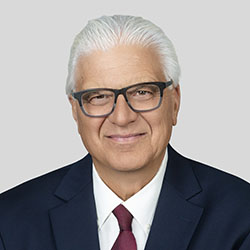
DeBenedetti Majewski Szcześniak (DMS) is a distinguished Polish boutique law firm established in 2004 by C. David DeBenedetti, Dariusz Szcześniak, and Jarosław Majewski.

DMS was created to deliver the expertise, representation, and strategic business advisory services typical of a large firm, while providing the personalized attention and bespoke service of a boutique practice.

Rooted in trust and respect, DMS delivers comprehensive legal solutions for complex business challenges and projects demanding extensive knowledge and experience.

Business-Focused Outcomes

The firm seamlessly integrates dispute resolution and transactional advisory services, matching the caliber of international firms while ensuring greater accessibility and a more client-centric approach. DMS acts as a true business partner—responsible, precise, and fully attuned to each client’s objectives.

With a team of recognized experts and respected authorities, DMS combines deep legal expertise with practical, business-oriented solutions tailored to the needs of institutional and corporate clients.

Complex Subject Matter Experts

DMS specialises in corporate and commercial disputes, criminal and fiscal-criminal law, mergers and acquisitions and financial transactions.

The firm handles complex, multi-layered, and often high-profile matters for leading Polish and international financial institutions, insurance companies, banking and financial entities, investment funds, and companies across technology, real estate, and manufacturing sectors.

Thoughtful, Innovative Solutions

DMS is renowned for delivering thoughtful, innovative legal solutions that empower clients to strengthen their market position, achieve their goals, and effectively manage legal risk.

By integrating litigation and transactional expertise to provide legal support that truly advances business interests, DMS serves clients such as Fidera Group, Elliott Advisors (UK) Ltd, Vienna Insurance Group AG Wiener Versicherung Gruppe, Uber, JP Morgan Securities Plc., ALLIANZ Global, Palram, Heiztechnik, and Schuler Pressen GmbH.

Clients benefit from DMS’s top-tier market precision, along with direct access to partners. The firm is consistently recognized by leading legal directories, including Chambers and Partners, Forbes, The Legal 500, and IFLR1000.

A 20-Year Globalaw History

For more than 20 years, DMS’s Globalaw membership has enabled the firm to address cross-border transactions and international disputes involving Poland. Founding partner C. David DeBenedetti is the President-elect of Globalaw, and the firm plays an active role in the network’s Sports Law Taskforce. This fall, DMS will host the Globalaw Women’s Initiative Meeting in Warsaw.

DMS works closely with Globalaw member firms worldwide, including those in the U.S., on complex regulatory matters (such as SEC compliance), providing clients with coordinated, multi-jurisdictional advice. In partnership with New York member firm Olshan, DMS advised on Polish and U.S. regulatory issues for a Polish investment fund. The firm also has a strong track record of collaboration with G.J. Pelaghias LLC in Cyprus, Cohen Amir-Aslani in France and MOLITOR in Luxembourg.

For more information, visit: https://dms-legal.com/en/

Latest News

press
24 Apr 2026

Claims for Refund of Import Tariffs Collected by U.S. Authorities Under IEEPA

The article briefly analyses possible practical implications of the U.S. Supreme Court decision in Learning Resources, Inc. v. Trump, which declared tariffs imposed by the President of the U.S. in 2025 under the International Emergency Economic Powers Act (IEEPA) unlawful and outlines the resulting refund claims for EU importers.

Shortly after taking office, the President of the U.S., based on IEEPA, issued Executive Order No. 14257, 90 Fed. Reg. 15041 (2025)¹ due to large and persistent deficits, which allegedly led to undermining of critical supply chains in the U.S.

On February 20th, 2026, the Supreme Court of the U.S. concluded in Learning Resources, Inc. v. Trump² with respect to tariffs based on IEEPA imposed on importers to the U.S. that “Fulfilling that role, we hold that IEEPA does not authorize the President to impose tariffs.”³

Based on the court’s opinion, IEEPA was designed to address extraordinary situations in national security and foreign policy by enabling economic measures such as sanctions. However, under the administration of the U.S. President, it was interpreted broadly to impose tariffs on imports⁴. The Supreme Court rejected this approach, emphasizing that tariff-setting authority belongs to Congress unless expressly delegated.

The Supreme Court of the U.S. stated that the President of the U.S. does not have the authority to unilaterally impose taxes and tariffs under IEEPA at will. On the contrary, the Supreme Court of the U.S. emphasized that to assert such extraordinary power (specifically unlimited amount, duration, and scope), the President of the U.S. must identify clear congressional authorization⁵.

The decision represents a significant development in U.S. tariffs and international trade law. The Supreme Court of the United States held that import tariffs imposed under the IEEPA lack a valid legal basis, as the statute does not authorize tariffs as a fiscal measure.

As a result, the tariffs collected under IEEPA are considered unlawful. The ruling could affect more than 300,000 importers and approximately USD 175 billion in tariffs⁶. In response, U.S. Customs and Border Protection has ceased collecting such tariffs and is addressing refund claims⁷.

Affected importers may seek refunds of tariffs paid without a legal basis. However, such claims must be actively pursued. Claimants need to identify relevant import transactions and substantiate the amounts paid, as also reflected in the underlying material.

In practice, claims are typically initiated through administrative procedures, with judicial proceedings available if necessary.

The decision has important implications for EU companies exporting to the U.S. While it creates a significant financial opportunity, successful recovery depends on timely action and proper legal strategy.

From a practical perspective, importers should assess their exposure by reviewing imports into the U.S., identifying tariffs paid, and evaluating recovery options. Given potential time limits, prompt action is advisable.

EU companies that imported goods into the U.S. during the relevant period April 2025 – February 2026 should promptly assess their position, secure the necessary documentation, and consider appropriate legal steps, including cooperation with U.S. counsel.

--

For more information, contact:

Image

JUDr. Norbert Havrila, Partner

LEGATE

www.legate.sk

--

¹Executive Order No. 14257 of President of the U.S. (https://public-inspection.federalregister.gov/2025-06063.pdf)

²Ruling of the Supreme Court of the U.S. in Nos. 24–1287 and 25–250 (https://www.supremecourt.gov/opinions/25pdf/24-1287_4gcj.pdf)

³Article III (Pg. 20) of the Opinion of the Supreme Court of the U.S. in Nos. 24–1287 and 25–250;

⁴Article II.A.2  (Pg. 11 – 12) of the Opinion of the Supreme Court of the U.S. in Nos. 24–1287 and 25–250;

⁵Article III (Pg. 20) of the Opinion of the Supreme Court of the U.S. in Nos. 24–1287 and 25–250;

⁶PWM – University of Pennsylvania (https://budgetmodel.wharton.upenn.edu/p/2026-02-20-supreme-court-tariff-ruling)

⁷Consolidated Administration and Processing of Entries (CAPE) for IEEPA Refunds, April 20, 2026 Deployment (https://content.govdelivery.com/accounts/USDHSCBP/bulletins/4126a9c?reqfrom=share)

news
21 Apr 2026

Globalaw Foundation Donates $5,000 to Pro Bono SG During 2026 APAC Regional Meeting in Singapore

Globalaw, a leading network of approximately 80 independent law firms in over 60 countries, announces that the Globalaw Foundation presented a donation of $5,000 USD to Pro Bono SG during the 2026 Globalaw APAC Regional Meeting in Singapore.

The charity arm of The Law Society of Singapore, Pro Bono SG enables access to justice for the vulnerable and disadvantaged through legal awareness, advice, and advocacy. In FY24/25, the organization’s initiatives and programming served more than 16,000 individuals and organisations with a volunteer base of over 1,000.

“Pro Bono SG reflects the Globalaw Foundation’s mission of expanding access to justice by filling the gap for individuals and organisations that fall outside traditional legal aid resources,” said Peter J. Brown, Globalaw President and Partner at Edwards, Kenny & Bray. “We are proud to support their important work to protect and empower those who need it most.”

Donating to local charities is a fundamental component of Globalaw’s event programming. Representatives from selected nonprofits are also invited to meet and network with Globalaw member firms, helping them raise awareness of their organisations and build ongoing connections and engagement.

“We are thankful for being included in Globalaw’s APAC Regional Meeting and for the Foundation’s generous gift,” said Pro Bono SG Deputy CEO Chengying Cai, who accepted the donation in front of more than 100 guests during the event’s Welcome Reception at The Capitol Kempinski Hotel Singapore. “We truly appreciate the platform to showcase our work and meet the network.”

About The Globalaw Foundation

The Globalaw Foundation supports community organizations focused on helping young people access legal education and increasing access to justice for those who would otherwise be denied it for financial or other reasons. The foundation is funded through donations from Globalaw member firms and funds raised at Globalaw events. Visit www.globalaw.net for more information.

About Globalaw

Founded in 1994, Globalaw is a global Band 1 Chambers-ranked leading network of approximately 80 independent law firms and 4,000 lawyers in over 60 countries. Our mission is to foster seamless legal collaboration among member firms and assist them in delivering high-quality, cost-effective solutions to their clients worldwide. We take pride in our commitment to excellence, global reach, and innovative approach to legal services. Visit www.globalaw.net to learn more.

press
24 Mar 2026

Free Trade Zones in Costa Rica: Growth Engine Under New Challenges

Costa Rica has established itself as an attractive destination for foreign investment thanks to its political stability, qualified human capital, and a solid legal framework that provides security to investors. According to the Costa Rican Foreign Trade Promotion Agency (PROCOMER), 89% of employment related to free trade zones comes from companies with foreign capital, highlighting the direct impact of international investment on local job creation. This model not only promotes economic development but also strengthens Costa Rica’s competitiveness.

Between 1990 and 2024, the number of companies operating under the free trade zone regime increased from 56 to 626, demonstrating significant sector expansion. During this period, free trade zone companies generated a cumulative economic value of USD 13.893 billion, representing 15% of Costa Rica’s national GDP. In comparison, in 1990 their contribution amounted to only USD 215 million (1% of GDP), underscoring the growing strategic importance of free trade zones for the Costa Rican economy.

“Between 1990 and 2024, the number of companies under the free trade zone regime increased from 56 to 626, demonstrating significant sector expansion.”

A Success Model in Continuous Development

Since its introduction in the 1990s, Costa Rica’s free trade zone regime has evolved from an export-oriented industrial system into an advanced ecosystem for innovation, services, and high-tech manufacturing. According to the PROCOMER study “Free Trade Zone: 35 Years Building Value for Costa Rica”, the country has experienced sustained growth under this system.

Innovation and Technological Security

Over the past three decades, high-tech sectors within free trade zones have experienced exponential growth, bringing new regulatory challenges. Maintaining a balance between openness, innovation, and technological sovereignty requires close cooperation between the public and private sectors to safeguard national security without undermining international competitiveness.

This approach ensures that technological development and foreign investment continue contributing sustainably to economic growth.

Legal Framework and Tax Incentives

The Free Trade Zone Regime Law in Costa Rica establishes several categories of companies eligible for incentives, including manufacturing and export-oriented companies, service providers, research institutes, healthcare and audiovisual companies, as well as enterprises that promote economic development outside the Greater Metropolitan Area of San José.

The legal framework aims to attract new investment, foster technological innovation, and strengthen regional competitiveness—under modalities that ensure real job creation and modernization of production processes.

For national manufacturing companies operating under this regime, legislation allows access to tax exemptions and benefits regardless of export levels. According to Article 20, subsection d) of Law No. 7210 (Free Trade Zone Regime Law), companies are exempt for a period of ten years from the start of operations from capital taxes, net worth taxes, property taxes, and real estate transfer taxes.

In other words, incentives are not tied to export performance but to the strategic or territorial importance of the investment.

However, if goods produced under the free trade zone regime are sold in the domestic market, all corresponding taxes must be paid, applying the same customs procedures as imports from abroad.

In this context, the law introduces a key customs principle: tariffs apply only to imported raw materials used in production, not to the total value of the final product. This differentiated treatment—regulated under Article 21, subsection a) of the Free Trade Zone Law—ensures that tariffs reflect only the imported portion of the production process, in line with Costa Rica’s international obligations, and promotes a balanced, competitive, and transparent investment policy.

“Tax incentives are not linked to export performance, but to the strategic or territorial importance of the investment.”

Internal Competitiveness: Structural Challenges

According to the Costa Rican Free Trade Zone Association (AZOFRAS), in order to maintain growth within the regime, the country must address key national competitiveness factors, including:

  • Flexible labor regulations that allow operational adaptability in key industries;
  • Exchange rate fluctuations affecting financial planning for exporting companies;
  • Energy costs, which directly impact industrial production;
  • High social security contributions influencing wage competitiveness and talent planning;
  • Logistics and digital infrastructure, essential for efficiency and global market connectivity;
  • Human capital development, crucial for innovation and productivity in high-tech sectors.

Free trade zones represent a central pillar of Costa Rica’s economic model. Their future depends on the country’s ability to anticipate risks, adapt to global changes, and strengthen cooperation between government, business, and society. They represent more than a special tax system; they embody a development vision based on innovation, stability, and openness.

--

For more information, contact:

Image

Philip André, Partner

Lexincorp Central American Law Firm, San José

www.lexincorp.com

news
22 Mar 2026

Member Spotlight: Ulysses, Ukraine

When a law firm consistently wins over 95% of its cases, people take notice.

Ulysses, an independent law firm based in Kyiv, Ukraine, operates at the intersection of global legal systems to help national and multinational clients reach their goals in high-stakes disputes, public policy issues and complex transactions.

Known for precision, agility, and strategic depth, Ulysses lawyers skillfully apply both domestic and international law, as well as dispute-resolution mechanisms, to deliver effective outcomes.

Bold Thinking, Client-First Strategy

Ulysses defines itself through bold, results-driven representation.

Its ethos? “We win disputes. We close deals.”

Clients turn to Ulysses when the stakes are high politically, commercially, or reputationally. Many choose the firm because their legal issues cross borders or involve complex regulatory challenges.

Ulysses’ client relationships showcase its client-first approach. Whether helping a global corporation navigate a multibillion-dollar M&A deal or representing an investor in a dispute involving international banking regulations, Ulysses is known for relentlessly pursuing outcomes that serve the client’s best interests.

Globally Recognized Dispute & Transaction Expertise

Ulysses’ Disputes practice is built around cases that often influence public policy or international relations, including arbitration and alternative dispute resolution, complex litigation, investor-state disputes, and public international law.

The firm’s transactions and regulatory practice supports major commercial activities, including corporate and M&A, banking and finance, regulatory, and taxation for companies like Porsche Ukraine, EnergoGroup, and DPWorld.

The firm’s excellence has been recognized by leading authorities such as Chambers & Partners, IFLR1000, The Legal 500, WWL, and Liga Zakon.

A Leader in International Law

Ulysses is a leading expert in public international law and treaty-based disputes, garnering recognition in national and international media. Perhaps the strongest testament to the firm’s capabilities is its track record in investor-state matters:

Ulysses has negotiated and finalized 75% of publicly known investor–state settlements with Ukraine. These cases often involve delicate diplomatic issues, requiring a combination of legal knowledge, strategic negotiation skills, and a nuanced understanding of governmental processes.

The firm’s cross-border practice supports clients in the United States, the United Kingdom, the Netherlands, and other jurisdictions, advising on financial transactions, navigating regulatory frameworks, or structuring innovative banking services in Ukraine. Its team continuously monitors regulatory shifts, ensures compliance, and helps clients build internal policies and product standards that meet both domestic and international requirements.

Expanding International Capabilities Through Globalaw

Ulysses’ experience in multijurisdictional matters made its 2022 entry into Globalaw a natural step. The firm’s capabilities align seamlessly with the network’s mission: connecting top independent firms to help clients operate effectively across borders.

Through Globalaw, Ulysses has strengthened its ability to serve corporations, public policy stakeholders, and international entities whose matters often span multiple jurisdictions and regulatory frameworks. It allows Ulysses to support clients with deep local knowledge and coordinated global insight.

For more information, visit ulysses.law.